
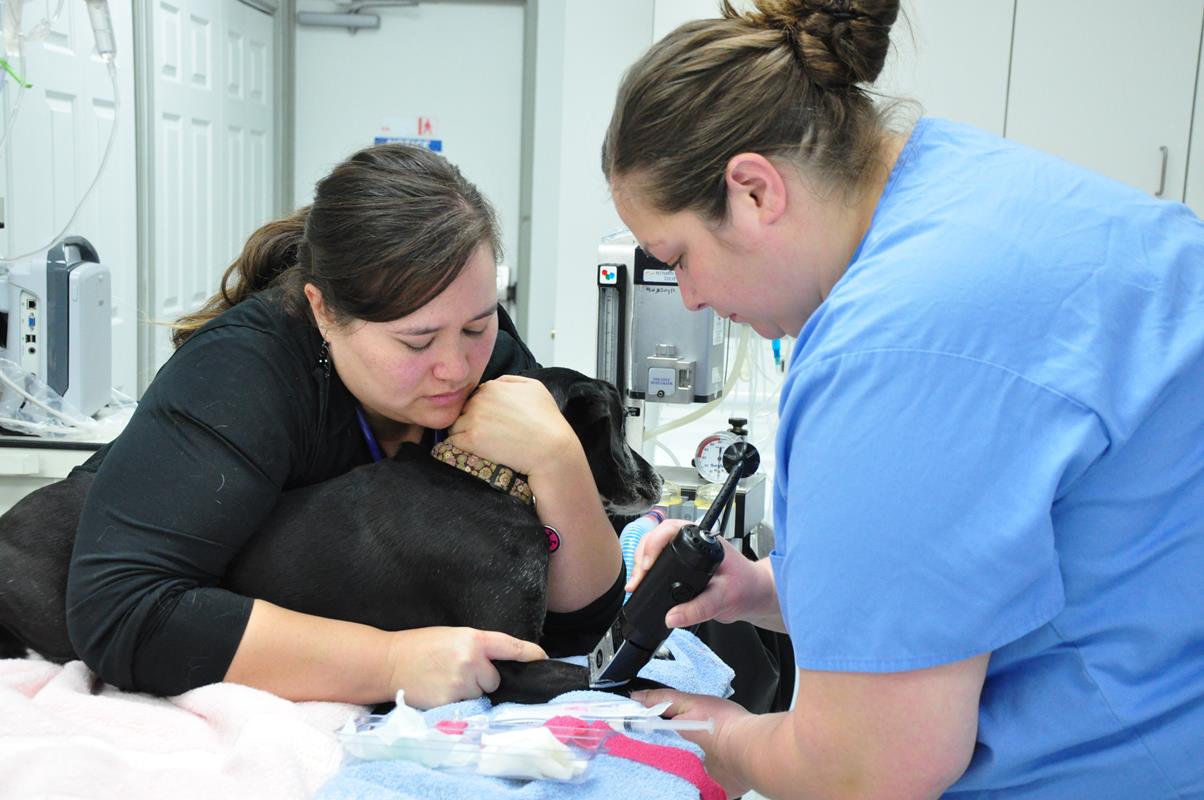
Pet Oral Surgery in Beaverton, OR
At Premier Pet Dentistry, we’re proud to provide oral surgery for dogs and cats — from careful surgical extractions to advanced reconstructive procedures. Using state-of-the-art equipment and current techniques, Dr. Martin works to give your pet a pain-free, disease-free mouth.
Surgical Extractions
The most common oral surgery we perform is exodontia, also known as extraction. Teeth may need to be extracted for many reasons, including periodontal disease, persistent baby teeth, crowding, fractured teeth, tooth resorption, and teeth causing trauma to other areas. Because many pet teeth have multiple long roots, we use surgical techniques and dental x-rays to ensure complete removal and comfortable healing. While extraction is sometimes the best choice, we always consider whether root canal therapy or restorations can save an important tooth.
Advanced Oral and Maxillofacial Surgery
Our oral surgery service also includes:
- Oral mass and tumor removal, including mandibulectomy and maxillectomy
- Jaw fracture repair and oral trauma treatment
- Cleft palate repair
- Oronasal fistula closure
- Extractions for feline stomatitis
- Reconstruction of facial injuries, including gunshot wounds
A Thorough, Personalized Approach
We plan every surgery based on your pet’s history, systemic health, and a thorough examination. We then discuss diagnostics and treatment options and walk you through each procedure so you understand exactly what your pet needs. Typically, oral surgery is performed on the same day as the dental evaluation under a customized anesthetic protocol with careful pain management.
Because animals can’t tell us what hurts, it’s important to have them examined regularly. Dr. Martin can identify problems and help your pet feel better quickly. Explore our dental services or our pet dentistry FAQs.
Pet Oral Surgery FAQs
Why would my pet need a tooth extracted?
Extractions may be needed for periodontal disease, retained baby teeth, crowding, fractured teeth, tooth resorption, or teeth causing trauma to other areas.
Is oral surgery painful for my pet?
We use local nerve blocks, a customized anesthetic protocol, and pain medications so your pet stays comfortable during and after surgery.
Can my pet eat after extractions?
Yes. Most pets eat soft food within a day and often eat better than before once painful teeth are removed.
Do you remove oral tumors?
Yes. We perform biopsies and surgical removal of oral masses, including partial jaw removal for invasive tumors.
Is oral surgery done the same day as the dental exam?
Typically, yes. Oral surgery is usually performed on the same day as your pet’s dental evaluation under anesthesia.
Do you repair jaw fractures and cleft palates?
Yes. Dr. Martin has a special interest in reconstructive maxillofacial surgery, including jaw fracture and cleft palate repair.
How should I care for my pet after oral surgery?
We provide detailed instructions, typically including soft food, no hard chews or toys during healing, pain medications, and a recheck appointment.
Schedule Oral Surgery Care for Your Pet
If you have any questions about oral surgery or would like to schedule an appointment for your pet, contact Premier Pet Dentistry today at 503-PREMIER ((503) 773-6437).